
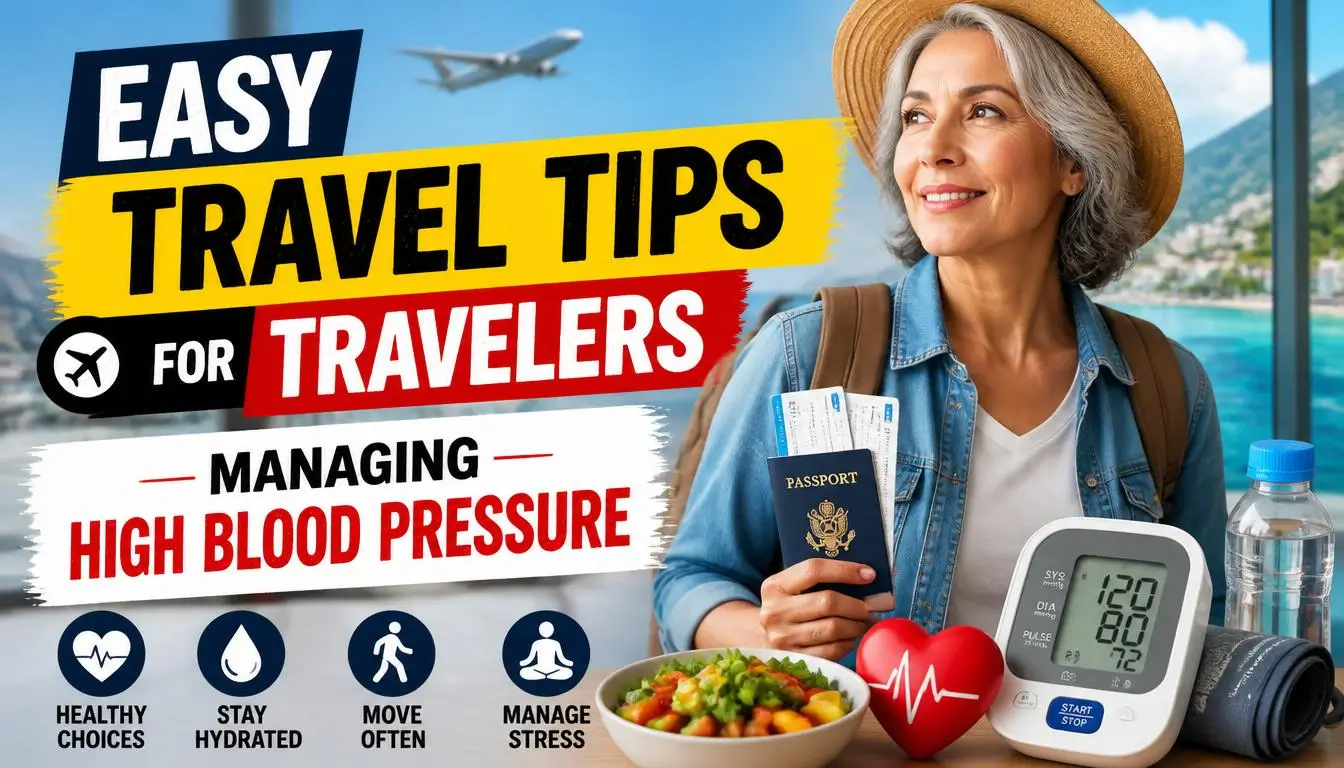
Finding easy travel tips for travelers managing high blood pressure matters more than most generic health travel advice acknowledges, because hypertension creates specific travel challenges that standard tips completely miss. Flying raises blood pressure. Altitude raises it more. Heat, dehydration, time zone disruption, travel stress, salty airport food, and missed medication doses all push numbers higher in ways that compound quickly. I was diagnosed with hypertension at 41, kept traveling to 19 more countries afterward, and these are the strategies that kept me both safe and genuinely enjoying trips rather than spending them anxious about my readings.
Get a Full Medical Review Specifically for Travel Before You Go
Not a general checkup. A travel-specific conversation with your doctor about this particular trip.
The distinction matters because the questions are different.
A general checkup confirms your blood pressure is currently managed. A travel-specific review addresses:
Whether your current medication regimen is appropriate for the specific conditions of your planned trip (altitude, heat, time zone changes, activity level).
Whether you need a short-term medication adjustment for particularly demanding travel days.
Whether your destination’s altitude, climate, or healthcare infrastructure creates specific risks for your condition.
Whether any planned activities (strenuous hiking, scuba diving, extreme sports) are contraindicated given your current blood pressure levels.
What your target blood pressure range should be during travel, and at what readings you should seek medical attention rather than wait.
I bring a written list of questions to this appointment rather than relying on the conversation to naturally cover everything. My list includes:
“Is my destination’s altitude likely to affect my blood pressure significantly?”
“Should I adjust my medication timing for time zone changes?”
“What blood pressure reading should trigger me seeking emergency care?”
“Do you recommend I bring a portable blood pressure monitor?”
“Are there activity restrictions I should observe?”
Getting specific answers to specific questions before travel is worth every minute of the appointment.
Carry More Medication Than You Think You Need
Running out of blood pressure medication abroad is not a minor inconvenience. It is a medical situation that can become serious within days depending on your condition and medication type.
Some blood pressure medications cannot be stopped abruptly without risk of rebound hypertension. Others require consistent daily dosing to maintain therapeutic levels. Running out of either type creates genuine medical risk.
My rule: carry twice the medication I calculate I’ll need.
For a 10-day trip taking one pill daily, I bring 20 pills minimum.
This covers:
- Trip extensions (weather delays, changed plans, opportunities to stay longer)
- Lost luggage containing your medication
- Damaged or dropped pills
- Customs issues where medication is held for inspection
- The possibility that your medication isn’t available at your destination
Medication goes in two places: a portion in your carry-on and a portion in your checked luggage. If one bag is lost, you have the other supply.
All medication travels in original prescription bottles with your name, the prescribing doctor’s name, and the medication name clearly labeled. A doctor’s letter describing your condition and medications eliminates customs complications in virtually every country.
Research whether your specific blood pressure medications are available in your destination country before traveling. Some medications common in the U.S. are controlled differently or unavailable in other countries. If your medication isn’t available there, running out becomes a more complex problem than a simple pharmacy visit.
Invest in a Portable Blood Pressure Monitor
A portable blood pressure monitor ($25 to $45 for a reliable upper arm model) is the most valuable piece of travel gear for hypertensive travelers.
It allows you to:
Monitor your baseline readings in your home environment before travel begins, giving you accurate comparison points.
Check your readings during travel days when stress, disruption, and changed conditions might be pushing your numbers higher without obvious symptoms.
Know when to rest and when it’s safe to continue planned activities.
Have objective data to share with medical professionals if you need care abroad.
Identify patterns over multiple days of travel that help you adjust your behavior, medication timing, or activity level.
I take my blood pressure every morning at home for two weeks before any significant trip to establish my personal travel baseline. Travel stress slightly elevates most people’s readings compared to relaxed home readings. Knowing your personal travel baseline prevents unnecessary anxiety when you see readings slightly higher than your at-home norm.
The Omron brand is consistently reliable, widely recommended by cardiologists, and their models in the $30 to $45 range are accurate enough for personal monitoring. The wrist models are compact but slightly less accurate than upper arm models. For hypertension management specifically, upper arm models are worth the slightly larger size.
Keep a simple log of readings during travel: date, time, reading, and any notes about what preceded it (stressful travel day, altitude change, missed medication, heavy meal). Patterns in this log are valuable both for your own management and for any medical consultation.
Understand How Altitude Affects Blood Pressure Specifically
Altitude is one of the most significant and least-discussed blood pressure triggers for travelers.
At elevations above 5,000 feet, lower oxygen levels cause the body to work harder. Heart rate increases. Blood vessels constrict. Blood pressure rises, often significantly.
For people with well-managed hypertension at sea level, arriving at altitude can produce readings substantially higher than their usual range.
Destinations with significant altitude that many travelers don’t think of as high-altitude:
Denver, Colorado: 5,280 feet.
Mexico City: 7,382 feet.
Bogotá, Colombia: 8,661 feet.
Cusco, Peru: 11,152 feet.
La Paz, Bolivia: 11,942 feet.
Addis Ababa, Ethiopia: 7,726 feet.
Lhasa, Tibet: 11,995 feet.
Many popular hiking destinations involve elevation gains that compound these baseline altitude effects during physical exertion.
Discuss altitude travel specifically with your doctor before any trip involving elevations above 5,000 feet. Some hypertension medications interact with altitude physiology in ways that require adjustment. Your doctor may recommend:
A gradual ascent schedule rather than flying directly to high altitude.
Increased monitoring frequency during the first 48 to 72 hours at altitude.
A temporary medication adjustment for altitude acclimatization.
Acetazolamide (Diamox) for altitude acclimatization, though this interacts with some blood pressure medications.
Not all altitude destinations are off-limits for hypertensive travelers. They simply require more specific planning and medical guidance than sea-level destinations.
Manage Flight-Specific Blood Pressure Triggers
Commercial flights create multiple simultaneous blood pressure triggers:
Cabin pressure changes during ascent and descent.
Low cabin humidity causing dehydration.
Prolonged sitting restricting circulation.
Alcohol consumption (common on flights, significant blood pressure raiser).
Salty airline food.
Travel anxiety and stress.
Disrupted medication timing across time zones.
Poor sleep on overnight flights.
None of these is individually catastrophic for most hypertensive travelers. In combination, they create conditions that can push blood pressure meaningfully higher during and immediately after flights.
My flight protocol for managing this:
Hydration: Drink 8 ounces of water per hour of flight. This sounds excessive and it isn’t. Cabin humidity runs at 10 to 20%, far drier than any environment you’d normally choose to spend extended time in. Dehydration raises blood pressure directly.
Avoid alcohol completely during flights. This is the single most impactful behavioral change for hypertensive flyers. Alcohol raises blood pressure, compounds dehydration, disrupts sleep quality, and interacts with many common blood pressure medications.
Choose low-sodium options. Airline food is notoriously salty. High sodium intake raises blood pressure within hours. Request special meals (low-sodium meal option is available on most major airlines with 24-hour advance notice) or bring your own food from home.
Move every 60 minutes minimum. Stand, walk to the bathroom, do standing stretches in the galley. Prolonged sitting increases blood viscosity and raises blood pressure. Movement counteracts this.
Take your medication at the appropriate time in your home time zone for the first 24 hours of travel. Changing medication timing abruptly can create peaks and troughs in your medication levels. Gradual adjustment over several days is safer than immediately switching to local time.
Choose Destinations That Lower Rather Than Raise Your Baseline Stress
Blood pressure is profoundly affected by stress levels. This is so well-established that it barely needs stating, but its travel implications are worth spelling out explicitly.
Certain travel environments chronically raise stress levels:
Extremely crowded tourist destinations in peak season.
Cities with chaotic, aggressive traffic requiring constant navigation attention.
Destinations with significant language barriers where basic transactions require exhausting effort.
Places with unreliable infrastructure (frequent power outages, unreliable water, inconsistent transport).
Destinations requiring constant vigilance about safety.
Extremely hot and humid climates that compound physical stress.
Other travel environments chronically lower stress:
Destinations with reliable, comprehensible infrastructure.
Smaller cities and towns with slower pace than major metropolitan areas.
Nature-focused destinations where the environment itself is calming.
Places where you’ve traveled before and feel comfortable navigating.
Destinations with manageable climates that don’t create constant physical discomfort.
This doesn’t mean hypertensive travelers should only visit gentle, uncrowded places. It means that when choosing between two equally appealing destinations, the one less likely to produce sustained environmental stress is the better medical choice.
It also means that building in lower-stress periods during any trip is important. A day in a busy city followed by a day at a slower pace, in nature, or simply staying close to your accommodation and resting, maintains a blood pressure-friendly rhythm across a longer trip.
Eat Strategically in High-Sodium Travel Environments
Sodium management while traveling is significantly harder than at home, where you control your cooking and know your products.
Restaurant food, processed travel food, and airport food are all significantly higher in sodium than home-cooked food. Soy sauce, processed meats, canned products, fast food, and bread all carry sodium loads that add up quickly across a travel day.
My sodium management strategies while traveling:
Cook breakfast and lunch in your accommodation when possible. This is the meal management where you have the most control. Fresh fruit, eggs, plain bread or rice, and unprocessed proteins are all naturally low-sodium and available everywhere.
Request sauces on the side at restaurants. Most high-sodium content in restaurant food comes from sauces and dressings. Receiving these separately allows you to use small amounts rather than having food prepared with them incorporated.
Choose grilled, steamed, or roasted preparations over sauced, braised, or fried. Simple preparations are reliably lower in sodium than complex ones.
Drink water aggressively, especially after higher-sodium meals. Adequate hydration helps your kidneys process excess sodium more effectively.
Identify naturally low-sodium cuisine options in your destination. Japanese food minus soy sauce can be low-sodium (sashimi, edamame, plain rice). Mediterranean food minus feta and olives can be low-sodium (grilled fish, vegetables, olive oil). Most fresh fruit and vegetable-based dishes are low-sodium regardless of cuisine.
Avoid processed snacks during travel days. Chips, crackers, packaged nuts, and convenience foods are the most significant sodium sources during transit. Pack fresh fruit, unsalted nuts, and home-prepared snacks instead.
Build Rest Into Every Itinerary Deliberately
Traveling with hypertension requires more deliberate rest than traveling without it.
Physical exertion raises blood pressure acutely. Cumulative fatigue raises it chronically. Sleep deprivation raises it both acutely and chronically. The combination of sightseeing, transit, disrupted sleep, and reduced rest that characterizes intense travel itineraries creates sustained blood pressure elevation that gradually compounds over a trip’s duration.
I structure every trip around what I call a “pressure rhythm”:
Active days: Significant walking, sightseeing, activities. I limit these to no more than two consecutive days.
Recovery days: Slower pace, minimal physical exertion, extended rest periods, staying close to accommodation. These follow any two consecutive active days.
Sleep protection: Regardless of what else is happening, I maintain seven to eight hours of sleep nightly. This isn’t negotiable around activities or social situations.
Afternoon rest: 30 to 60 minutes of lying down in the early afternoon, not necessarily sleeping, but horizontal and quiet. Blood pressure drops measurably with even brief periods of horizontal rest.
This rhythm produces lower average blood pressure readings across a multi-day trip than continuous activity does, and it also produces a better overall travel experience because I’m not exhausted by day four.
The mental shift required is accepting that rest days aren’t wasted days. They’re what make active days sustainable throughout a trip rather than just for the first two or three days.
Handle Heat and Humidity Carefully
Heat creates specific blood pressure management challenges for hypertensive travelers.
High temperatures cause blood vessels to dilate, which can lower blood pressure acutely. This sounds counterintuitively good, but the combination of vasodilation and dehydration from sweating can create orthostatic hypotension (blood pressure drops sharply when you stand up quickly), leading to dizziness, lightheadedness, and fall risk.
Some blood pressure medications amplify heat sensitivity:
Diuretics (water pills) combined with heat-related sweating can cause dangerous dehydration and electrolyte imbalance.
Beta-blockers reduce your heart’s ability to increase rate in response to heat, limiting your body’s cooling capacity.
ACE inhibitors and ARBs can interact with significant dehydration.
Before traveling to hot or humid destinations, discuss heat-specific medication considerations with your doctor.
During travel in heat:
Drink water continuously, not just when thirsty. Thirst is a late indicator of dehydration.
Spend midday hours (11 a.m. to 3 p.m.) in air-conditioned environments when possible.
Avoid strenuous outdoor activity during peak heat hours.
Wear loose, light-colored, breathable clothing.
Monitor for symptoms of heat-related illness: dizziness, excessive sweating, nausea, rapid heartbeat, confusion.
Check your blood pressure more frequently during heat exposure than in moderate temperatures.
Hot and humid destinations aren’t automatically off-limits for hypertensive travelers. They require more careful management than temperate destinations.
Know the Warning Signs That Require Immediate Medical Attention
Traveling with hypertension requires knowing specifically when a symptom is “monitor and adjust” versus “seek emergency care immediately.”
Seek emergency medical care immediately for:
Blood pressure readings above 180/120 mmHg (hypertensive crisis), especially if accompanied by any other symptoms.
Sudden severe headache, particularly at the back of the head.
Sudden vision changes or loss.
Chest pain or pressure of any kind.
Sudden difficulty speaking, understanding speech, or facial drooping (stroke symptoms).
Sudden severe shortness of breath.
Sudden weakness or numbness, particularly on one side of the body.
These symptoms in anyone require emergency attention. In someone with known hypertension, they require emergency attention without delay or self-monitoring while deciding.
Monitor and adjust (without emergency care) for:
Readings moderately elevated above your typical range without symptoms.
Mild headache without the sudden severe quality described above.
Fatigue that rests clearly addresses.
Know the emergency number in every country you visit. 911 is U.S.-specific. 999 in the UK, 112 throughout the EU, 000 in Australia. Saving these numbers in your phone before you need them takes 60 seconds.
Research the nearest hospital with emergency capability in every destination. Knowing where to go before you need it prevents panicked, delayed decisions during an actual emergency.
Frequently Asked Questions
Is flying safe for travelers managing high blood pressure?
For most people with controlled hypertension, flying is safe with appropriate precautions. The key word is controlled. If your blood pressure is currently well-managed with medication and lifestyle, flying presents manageable rather than prohibitive risk. Take your medication as usual, stay hydrated, avoid alcohol and salty food, move regularly during the flight, and avoid abrupt medication timing changes across time zones. Discuss flying specifically with your doctor if your hypertension is severe or recently diagnosed.
What are the easiest travel tips for travelers managing high blood pressure who want to visit high-altitude destinations?
Consult your doctor specifically about the altitude before booking. Arrive at lower altitude and spend two to three days acclimatizing before ascending further. Ascend gradually rather than flying directly to the highest point of your trip. Monitor blood pressure more frequently during the first 72 hours at altitude. Stay well hydrated. Avoid alcohol at altitude. Rest rather than being physically active during initial acclimatization. Have a plan for descending quickly if readings become dangerously elevated.
Can I travel internationally with hypertension medications without problems at customs?
Yes, with proper documentation. Keep medications in original prescription bottles with your name clearly labeled. Carry a doctor’s letter describing your condition and medications. Bring extra supply beyond calculated needs. Research whether your specific medications are legally permitted in your destination country, as some controlled substances have different classifications internationally. Most blood pressure medications travel without any customs issues when properly documented.
How do I handle time zone changes and medication timing for blood pressure medications?
Consult your doctor for medication-specific guidance, as different blood pressure medications have different sensitivity to timing changes. Generally, make gradual adjustments of one to two hours per day rather than abruptly switching to the new time zone’s timing. Some medications are more forgiving of timing variation than others. Once-daily medications taken at bedtime are often the most flexible. Twice-daily medications require more careful timing management across significant time zone changes.
What travel insurance considerations are important for hypertensive travelers?
Purchase travel insurance that explicitly covers pre-existing conditions including hypertension. Read the fine print carefully: many policies exclude pre-existing conditions unless specifically declared and covered. Medical evacuation coverage is essential, as emergency helicopter or air ambulance transport costs tens of thousands of dollars without coverage. Look for policies that cover emergency hospitalization, specialist care, and prescription medication replacement. World Nomads and Allianz both offer pre-existing condition coverage with proper declaration at purchase.
Conclusion
Hypertension managed well at home travels with you, not ahead of you. The condition doesn’t disappear when you cross a border, but neither does your ability to manage it thoughtfully. The travelers who do this well aren’t the ones who avoid every potential trigger or stay home out of caution. They’re the ones who prepare specifically, monitor consistently, rest deliberately, and trust their systems enough to actually enjoy where they are. What trip have you been putting off that deserves a conversation with your doctor about how to make it work?